
Start With the Job
If the question is “Which water is healthiest?”, begin with a better question: what do you need the water to do?
Scroll table horizontally →
| Water type | Main job | What it does well | What it is not |
|---|---|---|---|
| Boiled | Heat disinfection | Inactivates disease-causing microorganisms when boiled correctly | Broad chemical removal |
| Mineral | Source, taste and naturally occurring minerals | Convenient bottled water with a defined source and mineral profile | A treatment method for your tap water |
| RO | Broad purification | Reduces dissolved solids and a wider range of unwanted substances | A wellness additive or pH claim |
| Alkaline | Raised pH | Provides a different mineral profile and taste | Proof of purity or “alkalised” blood |
| Hydrogen-rich | Hydrogen enrichment | Adds dissolved molecular H₂ to compatible drinking water | A replacement for purification |
Velta’s position
Purify first, enhance second. Velta uses RO as the dependable purification foundation. Hydrogen-rich water is a separate wellness layer made from compatible purified, distilled or RO water—not untreated tap water.
01. Boiled Water
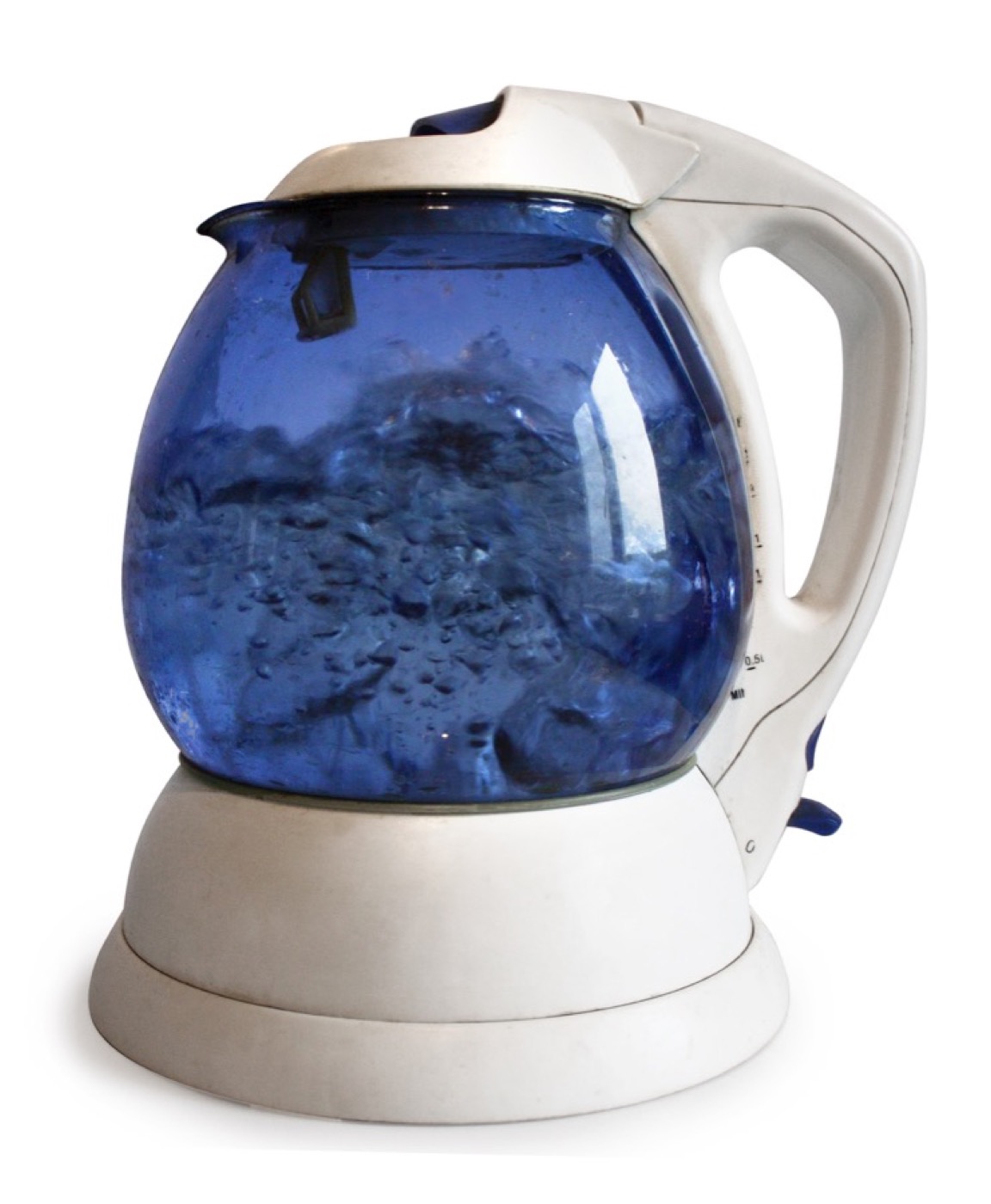
Boiling is excellent at one important job: killing disease-causing bacteria, viruses and parasites. This is why public-health agencies recommend it during a microbiological boil-water advisory.
Heat does not create a broad purification barrier. It does not remove dissolved salts, most metals, PFAS or many other chemical contaminants. For some non-volatile substances, evaporation can leave the remaining water more concentrated.
Best understood as: a microbiological precaution, not complete water treatment.
02. Mineral Water
Mineral water comes from an underground source and contains a characteristic level of naturally occurring minerals. Its appeal is mainly source, convenience and taste.
Calcium and magnesium in water can contribute to total intake, but the amount varies greatly by brand and source. Food remains the more substantial and controllable way to obtain minerals. Choosing a filter simply because it “keeps minerals” also means accepting that the same barrier allows many other dissolved substances to pass.
Best understood as: a bottled-water category, not evidence that mineral-retaining filtration is more protective.
03. Reverse-Osmosis Water
RO uses pressure to move water through a dense membrane commonly described around 0.0001 micron. Unlike boiling, sediment filtration or carbon alone, RO is designed to reduce dissolved solids as well as particles.
That broad barrier is why Velta focuses on RO for Malaysian homes. A membrane cannot recognise “good minerals” and reject only “bad contaminants”. Velta starts with a more dependable principle: reduce the wider dissolved load, then manage taste, dispensing and maintenance around purified water.
Every Velta RO purifier includes TDS monitoring, so customers can see the inlet and purified-water readings instead of relying only on taste or a service date.
Best understood as: the strongest purification foundation among these five choices.
04. Alkaline Water
Alkaline water has a pH above neutral, usually because of its mineral composition or an ionisation process. That number describes acidity or alkalinity; it does not tell you whether PFAS, heavy metals, microplastics or microorganisms were removed.
The body regulates blood pH tightly through the lungs, kidneys and buffering systems. Drinking higher-pH water is not the same as “alkalising the body”. Some people may prefer the taste, but pH should not be confused with purification.
Best understood as: a pH and taste choice, not Velta’s purification strategy.
05. Hydrogen-Rich Water
Hydrogen-rich water contains dissolved molecular hydrogen gas (H₂). It is different from alkaline water: pH and dissolved H₂ are separate measurements, even when one appliance happens to produce both.
Hydrogen-water research is active, with early human studies exploring exercise, metabolism, oxidative stress and other outcomes. A 2024 systematic review found encouraging preliminary signals while calling for larger and more rigorous studies. Velta presents hydrogen-rich water as a wellness choice, not a replacement for medical care.
The Hhuhu Hydrogen Milker takes already-compatible purified, distilled or RO water and adds dissolved H₂ plus suspended micro- and nanobubbles. It does not purify tap water.
Best understood as: an optional enrichment step after purification.
So Which One Should You Choose?
For everyday purification
Choose RO water.
It offers the broadest treatment foundation in this comparison and is why Velta’s purifier range is centred on RO.
During a boil-water advisory
Follow the official notice.
Boiling is appropriate for microbiological risk. It cannot make chemically contaminated water safe.
For bottled convenience
Mineral water is a preference.
Compare source, mineral analysis, packaging and cost rather than assuming “more minerals” means cleaner water.
For hydrogen wellness
Purify, then enrich.
Use compatible purified or RO water as the starting point, then add molecular hydrogen with the correct appliance.
Common questions
Frequently Asked Questions
Is boiled water the same as purified water?
No. Boiling is effective against microorganisms but does not remove most dissolved chemical contaminants.
Is RO water unhealthy because it removes minerals?
No. Drinking water’s primary role is hydration, while food is the main and more dependable source of essential minerals. Velta prioritises the broader purification barrier instead of opening the membrane to keep a small, variable mineral contribution.
Is alkaline water cleaner than RO water?
Not because it is alkaline. pH does not measure contaminant removal. Judge the exact treatment stages and test results, not the pH.
Does Hhuhu purify tap water?
No. Hhuhu starts with compatible purified, distilled or RO water and adds molecular hydrogen. It is an enrichment appliance, not a tap-water purifier.
Sources checked 1 August 2026