
Mould spores are common in the environment. Indoor growth becomes a problem when moisture allows spores to grow on walls, ceilings, furniture, fabrics or hidden building materials. The lasting solution is moisture control, not fragrance, paint or an air purifier alone.
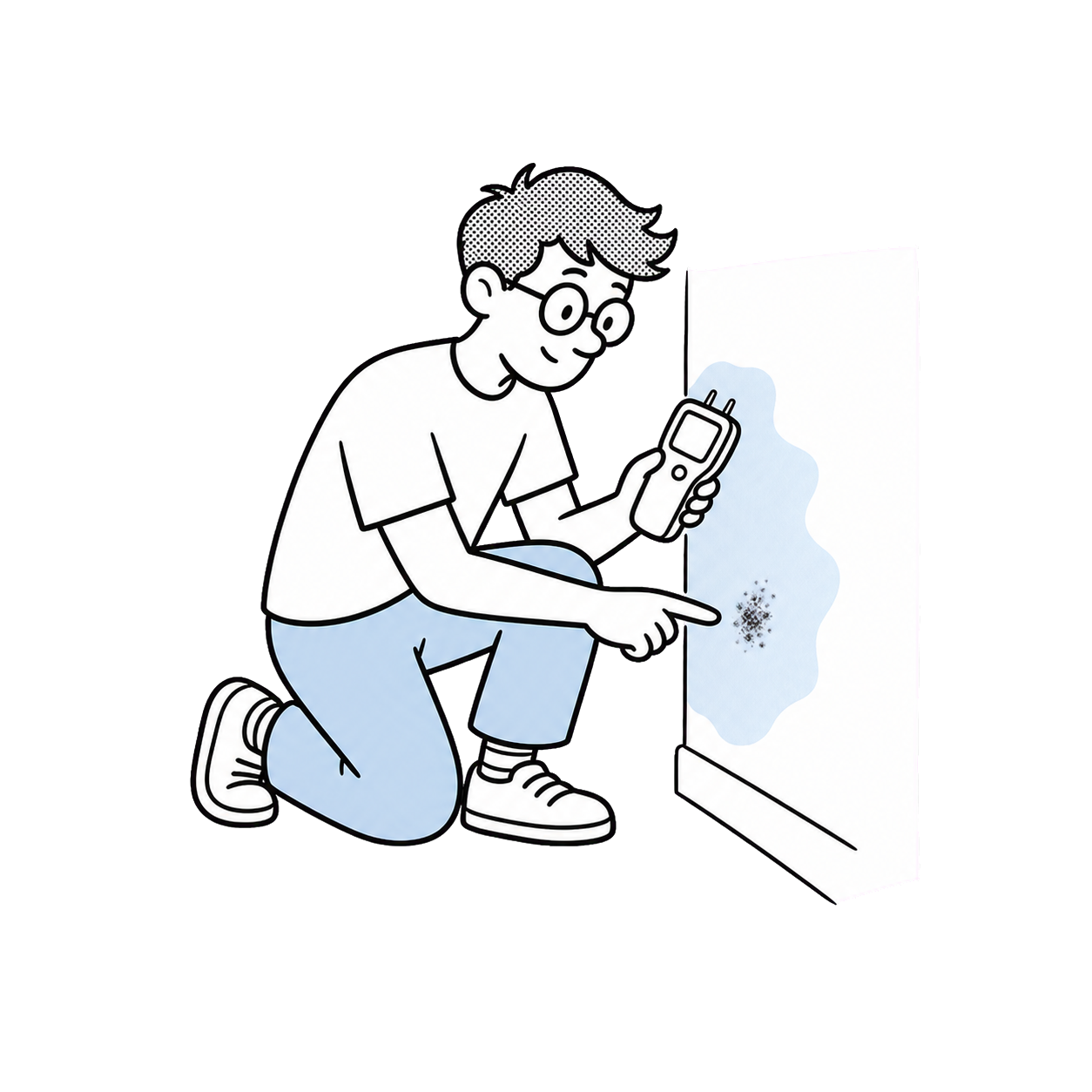
Find the moisture source
Common causes include plumbing or roof leaks, rain entry, condensation on cold surfaces, blocked air-conditioning drains, poorly ventilated bathrooms, flooding and persistently high indoor humidity.
Look beyond the visible patch. Staining, peeling paint, swollen boards, musty odour and recurring condensation may point to a concealed or unresolved source.
Act quickly after water damage
Official guidance recommends drying wet materials promptly, ideally within 24 to 48 hours where practical. Repair the leak or water entry first. Porous material that cannot be cleaned and fully dried may need removal rather than surface treatment.
Humidity and Malaysian homes
Warm, humid conditions make moisture management important. A practical target is to keep indoor relative humidity below 60%, with 30–50% often cited as an ideal range when achievable. Air-conditioning, dehumidification, exhaust ventilation and better airflow can help, but the right response depends on outdoor humidity and the building.
Cleaning is not simply “killing” mould
Dead mould can still contain material that triggers reactions. Routine spraying with bleach or another biocide is not a substitute for physical removal and moisture correction, and cleaning chemicals should never be mixed. Use appropriate protection and ventilation for the task.
Large areas, repeated growth, sewage contamination, hidden building damage or homes with highly vulnerable occupants are sensible reasons to seek experienced professional help.
Where an air purifier fits
A suitable particle filter may reduce some airborne particles passing through it during and after cleanup. It cannot dry a wall, repair a leak, remove growth embedded in material or prevent recurrence while moisture remains.
Do not aim a fan or purifier directly at active visible growth in a way that may disturb and spread material through the room.
Common questions
Mould FAQ
Can I paint over mould?+
Not while the surface remains damp or contaminated. Correct the moisture source and clean or remove affected material first.
Will an air purifier remove a musty smell?+
It may affect some airborne material or odour, but a persistent musty smell is a reason to look for hidden moisture or growth.
Do I need a home mould test kit?+
When mould is visibly growing, the priority is usually moisture correction and cleanup. Testing is more useful when it answers a defined question for a qualified assessment.
Official guidance