
A well-informed wellness choice
Hydrogen inhalation is an emerging wellness category supported by a growing international research field. Velta makes it easier to explore by pairing product-specific guidance with clear research sources. For personal medical questions, your healthcare professional remains the best guide.
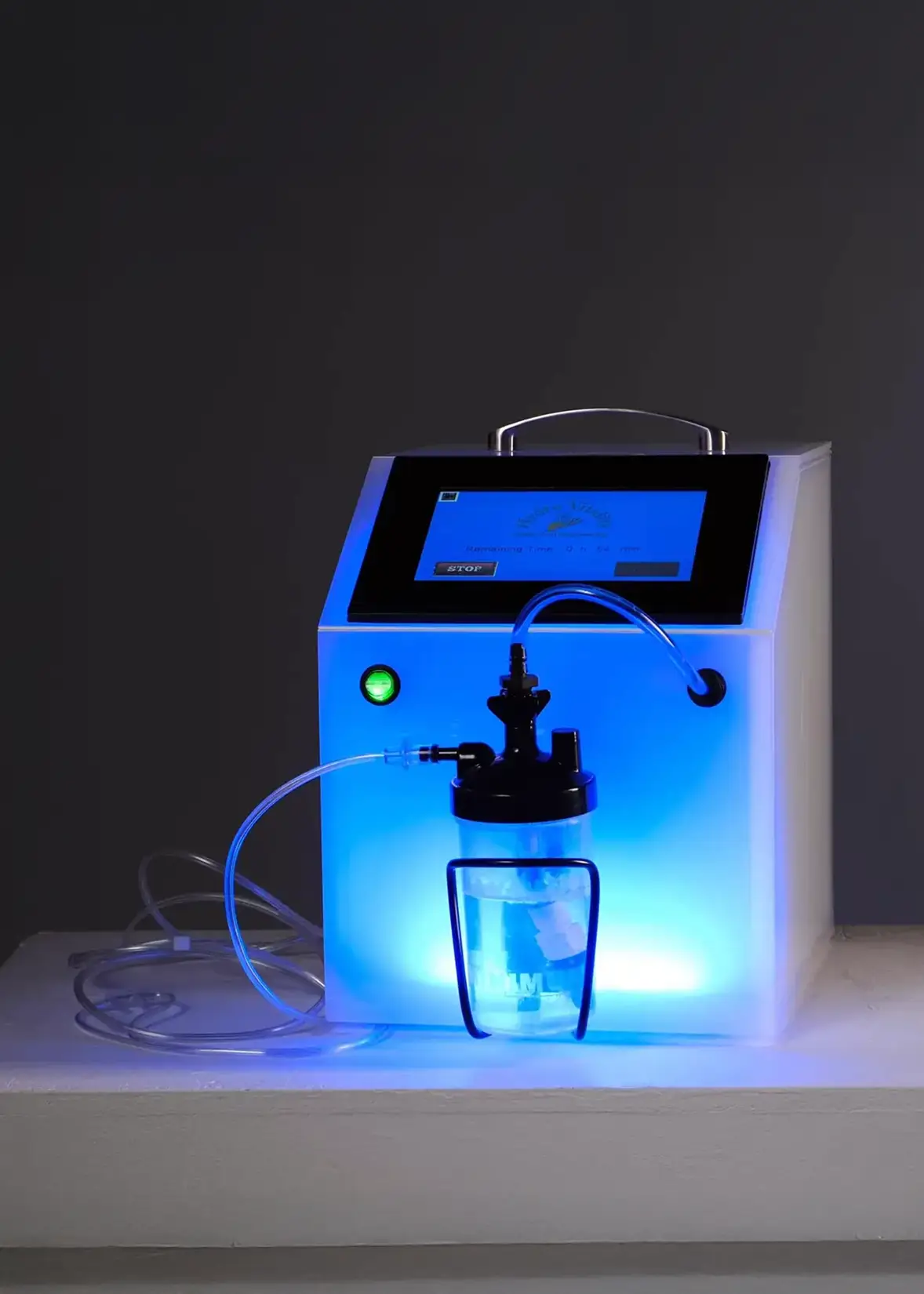
Hydrogen inhalation means breathing a hydrogen-containing gas produced by a purpose-built generator. The gas is normally delivered through a nasal cannula while the person breathes normally—often while reading, working quietly or relaxing.

01 · From water to breath
How does hydrogen inhalation work?
A purpose-built generator uses electrolysis to separate water into gases. Some systems supply a hydrogen-rich stream, while oxyhydrogen systems supply hydrogen and oxygen together. The supplied tubing and nasal cannula then make inhalation simple and comfortable while you breathe normally.
01 · Generate
The machine produces gas.
Purified source water and precision electrolysis create the product’s specified gas output.
02 · Deliver
A lightweight cannula carries it.
The supplied nasal cannula lets you breathe naturally while reading, resting or working quietly.
03 · Inhale
H₂ enters with the breath.
Hydrogen molecules reach the lungs and can diffuse rapidly because of their extremely small molecular size.
04 · Disperse
Research follows its journey.
Scientists study how H₂ moves through biological environments and interacts with redox and signalling pathways.
Each system creates its own experience through its gas composition, output and delivery design. Velta can help you compare these details and select the format that best suits your routine.
02 · Why people are interested
What are the possible benefits of hydrogen inhalation?
Molecular hydrogen has attracted worldwide research interest for its potential influence on oxidative balance, inflammatory signalling, mitochondrial function and cellular resilience. These pathways connect naturally with the wellness goals many people care about most: recovery, energy, resilience and healthy ageing.
Supporting the body after exertion.
Human studies and reviews explore perceived fatigue, exercise response, lactate and oxidative-stress markers.
Explore energy and recovery research →Exploring wider cellular balance.
Researchers are studying glucose, circulation, mitochondrial function and metabolic markers as part of long-term wellbeing.
Explore metabolism and healthy-ageing research →A direct and convenient delivery route.
Inhalation gives researchers a practical way to study hydrogen in relation to oxidative stress, inflammation and respiratory resilience.
Explore lungs and resilience research →A growing international research field.
Molecular hydrogen has progressed into controlled human studies, clinical reviews and registered trials across a wide range of interests.
Explore clinical research →Why this mattersHydrogen research has moved well beyond theory. Scientists around the world are now refining protocols and exploring where this remarkably small molecule may be most useful.
03 · Evidence you can explore
What research supports molecular hydrogen and inhalation?
The research landscape now includes mechanism studies, controlled human trials, evidence reviews and registered clinical research. Together, they show an active field with serious scientific interest and an expanding understanding of how molecular hydrogen may support wellbeing.
64 human-study papers and 81 registered trials.
A 2023 review mapped published clinical work across delivery routes and outcomes, demonstrating the breadth of research already underway.
Read the clinical-studies review ↗Studied across 15 Japanese hospitals.
HYBRID II used a rigorous randomised, double-blind and placebo-controlled design, showing that hydrogen inhalation has reached high-level clinical investigation.
Read the HYBRID II trial record ↗Inhalation offers a distinct research pathway.
A six-month study compared inhalation and hydrogen water across multiple physiological measures, helping researchers understand the strengths of each route.
Read the Scientific Reports study ↗Research is moving toward better protocols.
A recent clinical review describes encouraging findings and the continued progress toward larger trials and more consistent delivery methods.
Read the clinical inhalation review ↗Explore Velta’s full research library →Search registered hydrogen studies ↗
04 · Your experience
What can a hydrogen inhalation routine feel like?
Hydrogen inhalation is designed to fit quietly into everyday life. You breathe normally through a lightweight nasal cannula while reading, working or relaxing. Because hydrogen itself is colourless and odourless, the experience is typically gentle rather than dramatic.
Everyone’s wellness journey is personal. Research protocols range from individual sessions to consistent routines over several weeks, depending on the outcome being studied. The most useful approach is to follow your product’s recommended routine and notice how it fits into your day.
Breathe normally through the supplied cannula while you read, work quietly or simply take time to unwind.
Some people describe feeling rested or refreshed, while others simply appreciate how comfortably the session fits their schedule.
Follow the recommended session guidance and give yourself time to understand how hydrogen inhalation complements your wider wellness habits.
Two inhalation experiences, one fascinating molecule.
Velta offers both hydrogen and oxyhydrogen systems. Each uses electrolysis and delivers molecular hydrogen through inhalation, with its own gas composition, output and experience. This gives you the freedom to compare formats and choose the one that best fits your priorities.
Scroll table horizontally →
| Product | Category | What makes it distinctive |
|---|---|---|
| HydroVitality | Oxyhydrogen inhalation | A hydrogen-and-oxygen experience with its own output, setup and maintenance programme |
| Hhuhu 500 Plus | Hydrogen inhalation | 500 cc/min stable hydrogen output with Breath-Sync™ delivery and guided accessories |
| Hhuhu Hydrogen Milker | Hydrogen-rich water | A convenient way to prepare molecular-hydrogen-enriched drinking water |
Our team can demonstrate the systems side by side and explain the setup, routine and ownership experience of each one.
Choosing your system
Seven ways Velta helps you choose with confidence.
- 01Understand what the model produces.
We explain the gas composition and output clearly, so comparisons are meaningful.
- 02Experience how it is delivered.
Compare continuous delivery, Breath-Sync™ design, cannula setup and the overall feel of a session.
- 03Explore the research behind the category.
Our research library links directly to reviews, human studies and registered trials for deeper reading.
- 04Plan the right place for it.
We guide you through source water, positioning, ventilation and the space required for comfortable use.
- 05See the daily routine.
Our team can demonstrate filling, draining, cleaning, cannula care and storage before you decide.
- 06Match the system to your lifestyle.
Consider session style, output, size and how naturally the equipment fits into your home or workday.
- 07Enjoy local after-sales support.
Velta Malaysia provides a clear route for product guidance, maintenance, troubleshooting and warranty support.
Simple care for a confident daily routine.
Good ownership is straightforward: use the supplied accessories, follow the product’s water and cleaning guidance, keep the machine in a well-ventilated space away from flames or sparks, and let Velta support you whenever you have a question. Your product demonstration and manual cover the complete routine for your chosen model.
Hydrogen inhalation FAQ
The questions buyers ask most.
What benefits are researchers exploring?
Research interest centres on recovery, fatigue, oxidative balance, metabolic resilience, respiratory science and healthy ageing. Our human-health research guide brings together original studies so you can explore the areas most relevant to you.
Is there scientific research?
Yes. The field includes controlled human studies, clinical reviews, registered trials and extensive laboratory research. See the research highlights above or browse Velta’s full research library.
How soon might I notice something?
Experiences vary. Some people appreciate the calm routine immediately, while many research programmes examine outcomes across repeated sessions. Following the recommended routine consistently gives you the clearest sense of how it fits your wellness lifestyle.
How long is an inhalation session?
Session guidance depends on the chosen model and its delivery design. Velta will explain the recommended routine during your demonstration and help you choose a system that fits comfortably into your day.
Can I try it before deciding?
Yes. The Velta Experience Centre in Kiara 163 offers a guided equipment experience by confirmed appointment, so you can see the setup, hear the machine and experience the routine for yourself. Book your hydrogen experience.